I research everything. Not because I enjoy it, though sometimes I do. Because I have to. Time is limited. Money is limited. Usually both at the same time. So when I need something, whether it is a stroller or a laptop or a place to take my family for dinner in a city I have never been to, I need to get the decision right. I cannot afford to get it wrong and start over.
That should be easy now. Information is everywhere. Reviews are everywhere. Influencers are everywhere. And yet, the more sources I find, the less I trust. Because almost none of it is what it claims to be.
The problem is not a lack of information. It is a lack of honest information.
Reviews are one of the most meaningful parts of any purchasing decision. They should be. But look at what passes for a review today. "Arrived in good condition. Five stars." That tells you the courier did their job. It tells you nothing about the product.
It gets worse. Many of those reviews are bought. Companies invest in review volume the same way they invest in advertising, except advertising at least announces itself. A bought review pretends to be a real person's genuine opinion. And platforms reward quantity. A product with 4,000 reviews outranks a product with 40 reviews, regardless of whether those 4,000 reviews say anything meaningful at all.
Then there are the influencers. Some of them started with genuine intent. But the model is broken now. When your income depends on brands paying you to feature their products, you are not reviewing anything. You are advertising with a personal face. And the audience knows it, even if they cannot always articulate why they stopped trusting what they see.
I am not saying everyone is dishonest. I am saying the systems we have built reward dishonesty, and the honest voices get buried.
When good products cannot explain themselves
I run a children's clothing brand called Burrow and Be. Small, boutique, genuinely well-made. When I started trying to market it properly, I ran into something I was not expecting.
People did not understand what they were looking at. Not because the product was complicated, but because the information environment had made it impossible to tell the difference between a product that costs more because it is better and a product that costs more because someone paid for better marketing.
Here is an example that still frustrates me. Polyester children's clothing is a significant contributor to eczema in young children. Their skin cannot breathe. The chemicals in synthetic fabrics interact with sensitive skin and cause reactions that parents then spend months trying to solve with creams and specialist appointments. Even some bamboo fabrics, marketed as natural, are processed with harsh chemicals that cause the same problems.
But nobody tells parents this. Not the brands selling polyester. Not the platforms listing products. Not the influencers being paid to promote them. So a parent sees a $15 onesie and a $45 onesie and does not understand why one is worth three times the other. The information that would help them make that decision does not exist in any form they can easily find.
That is the problem I kept running into. Not just for children's clothing. For everything.
What I kept doing anyway
Long before this became a platform, it was just how I lived. I would spend hours researching a stroller. Not reading spec sheets, but trying to find someone who had actually used one on the streets I walk, with a child the age of mine, and could tell me what it was genuinely like after six months. Not what it was like for the first three days when everything is new and exciting.
I would find a restaurant by cross-referencing reviews against travel forums against local blogs, trying to piece together whether the place was actually good or just well-promoted. I would research a laptop not by comparing benchmark scores, but by trying to find someone who used it the way I use mine and could tell me whether it disappeared into the background of their work or constantly reminded them it existed.
Every conversation I had with friends went the same way. They bought something because it had good reviews. The reviews turned out to be meaningless, bought, or written by someone who had never used the thing for more than a day. And now they owned something that did not solve their problem, bought with money they could not easily replace.
Everyone I spoke to shared the same frustration. Talented, intelligent people who wanted good information and could not find it. But nobody was building the answer.
Why now
I have had this idea for years. What stopped me was not conviction. It was capacity. Running Burrow and Be, raising a family, working full-time. There was no room to build another thing that required this much care.
Three things changed.
The first is that editorial infrastructure has reached a point where a small team can operate with the output of a much larger one. Not by replacing the human parts. The actual experience, the genuine opinion, the real relationship with the products and services we write about. Those are irreplaceable. But the operational overhead, the research synthesis, the formatting, the scaling of honest content from raw thoughts into something publishable. That can be systematised now in a way it could not be three years ago. What that means is that someone with genuine experience and raw, honest thoughts does not need to also be a professional writer or content creator to contribute something worth reading. The editorial infrastructure can meet them where they are.
The second is that I stopped waiting for someone else to build it. Every conversation I had, with friends, with other parents, with the founders behind the brands I admire, went the same way. Everyone shared the frustration. Many of them had their own stories, their own hard-won insights about products they had actually lived with. Some of them had expertise in categories I will never have. But nobody had built a place to put all of that together. I realised the platform I wanted to read was the platform I needed to build. Not alone, but as the foundation that other people's genuine experiences could eventually live on too.
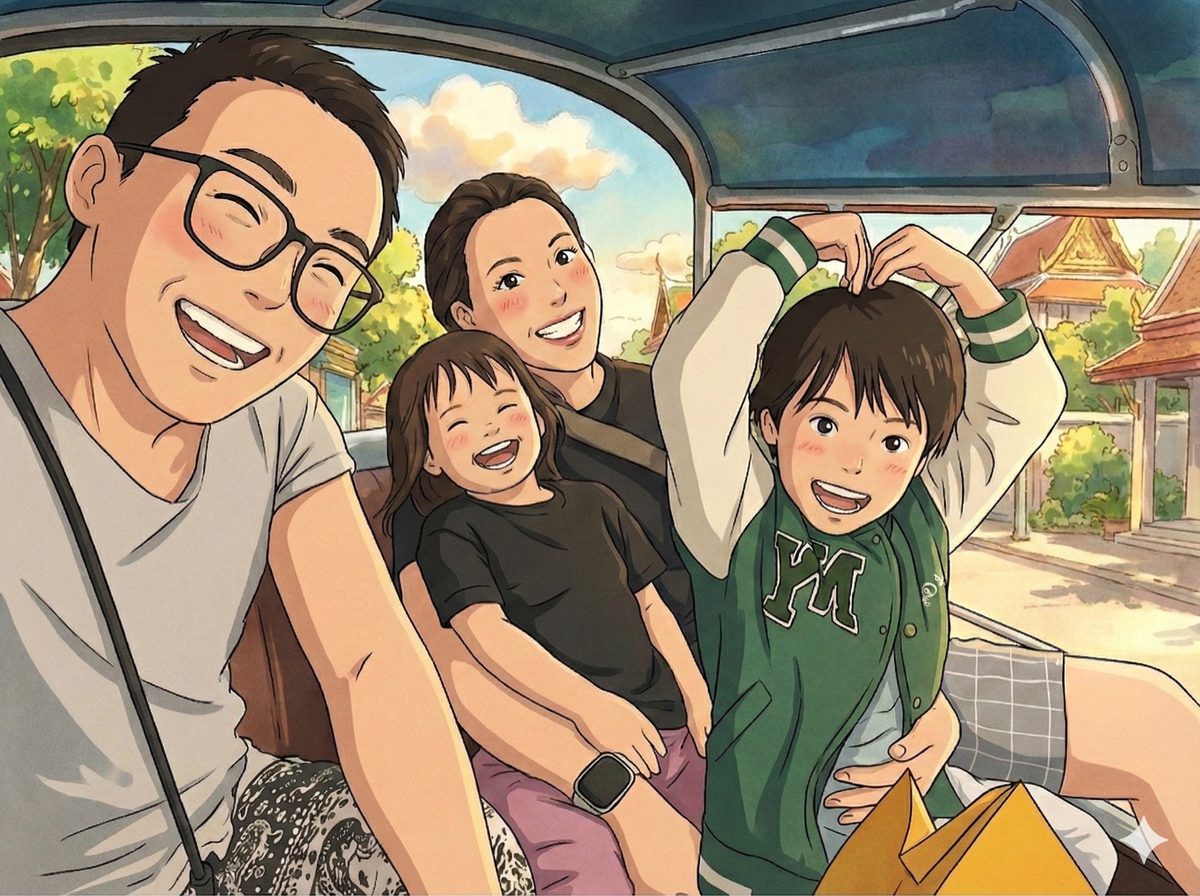
The third is my family. I want my kids to grow up seeing that meaningful work is possible. That you can build something with ambition and integrity at the same time. That there are ways to create value that do not require compromising on honesty. MOE is as much a proof of concept for them as it is a platform for everyone else.
What My Oddly Even actually is
MOE is an experience-led editorial platform. Everything published here starts with a real need, moves through what I actually found when I looked deeper than the marketing, and ends with the honest account of living with the result.
It is not a review site. Reviews render verdicts. I document decisions.
It is not an influencer account. There is no persona to maintain. The experience is the story.
It is not a recommendation engine. I do not tell you what to buy. I tell you what happened when I faced the decision you are facing now, what I learned, what I chose, and what I would do differently. The verdict is always conditional. "If you are in this situation, this is what we found." Not "buy this."
It covers the things I actually care about. Family, because I am raising children and every decision feels consequential. Create, because I use tools to make things and some of those tools change what is possible. Work, because the gear and systems I use every day either get out of the way or get in it. Travel, because we take our family places and every trip teaches us something about what we actually need versus what we thought we needed.
Why it is harder to explain than to use
If you read one piece on this site and it helps you make a better decision, you will understand immediately what MOE is. You will not need this manifesto. The stroller story will explain itself. The laptop piece will explain itself. The brand story about a small NZ clothing company will explain itself.
But explaining the model before you have experienced it? That is harder. Because it sounds like what everyone else claims to do. "Honest reviews." "Real recommendations." "Trusted voices." Every platform says that. The difference is not in the claim. It is in the work.
The difference is that I can tell you which airport gates the YOYO stroller fits through and which ones require you to collapse it. Because I was there with it, in Singapore, in Tokyo, with a toddler who needed to nap and a connecting flight that did not care about nap schedules.
The difference is that I will tell you when something does not work. Not as a disclaimer buried in the last paragraph. As the most important part of the piece. Because the honest limits are where the real value lives. Anyone can tell you why something is great. Only someone who has lived with it can tell you when it stops being the answer.
What comes next
I am starting with my own stories and my own team's stories. The stroller journey. The camera that changed what I could capture. The laptop that disappeared into my workflow. The brands I know personally and can speak about with genuine knowledge. My wife Cynthia's perspective on the same products from a different context. Contributors who bring expertise in categories I will never have.
But the vision for MOE goes further than our stories. The internet is full of people who have genuine, hard-won knowledge about the things they have researched, bought, and lived with. People who would happily share what they know if someone asked. People who are not comfortable making video content, who do not have a social media following, who have never thought of themselves as writers. But they have done the work. They have made the decisions. They have lived with the results. And the insights sitting in their heads are exactly the insights someone else needs right now.
MOE is being built as a platform that can take those raw, honest experiences and turn them into something genuinely useful. You do not need to be a polished writer. You do not need a following. You need to have actually used the thing and be willing to be honest about what you found. The editorial support, the structure, the publishing infrastructure. That is what MOE provides. Your experience is what makes it worth reading.
They say adulting is hard. Adulting without information or help is harder. We can all struggle separately, making the same mistakes with the same products because nobody thought to write down what they actually learned. Or we can start sharing. Not advice. Not opinions. Experiences. Documented honestly, structured clearly, published for the people who need them most.
I am not trying to fix the entire information economy. I am trying to build one place where, when you read something, you can trust that the person who wrote it actually lived it. And if that helps even one person avoid buying the polyester onesie that gives their kid a rash, or find the stroller that actually fits their life instead of the one with the most sponsored posts, then it was worth building something harder to explain than to use.